
Medically Reviewed By: Purvi Chirag Shah, Superintendent Pharmacist (GPhC Number: 2080242)
Last Reviewed: July 2026 | Next Review: July 2027
Taking medication correctly is an essential pillar of managing long-term health conditions. However, as we age, managing a daily pharmaceutical routine can become increasingly complex.
Many older adults across the UK take multiple medicines each day, often prescribed by different healthcare specialists, consultants, and family GPs. Coordinating repeat prescriptions, remembering exact dosages, and adapting to sudden medication changes can quickly become a significant challenge, particularly for those living with several chronic conditions.
Even small medication slip-ups can affect how well a treatment works, increase the risk of unwanted side effects, and create unnecessary stress for both patients and family carers.
In this comprehensive guide, we outline the most common medication mistakes older adults face, why they happen, and practical, safe ways to help reduce the daily burden of staying organised.
H2: Why Medication Mistakes Become More Common With Age
Medication mistakes can happen at any age, but older individuals face distinct physical, cognitive, and logistical challenges. As the body ages, changes in liver and kidney function alter how medicines are processed, making older adults naturally more sensitive to side effects and dosing variations.
Concurrently, everyday practical tasks can become harder to manage alone:
- Complex Routines: Tracking different pills required at multiple intervals throughout the day.
- Physical Limitations: Reduced eyesight making small print on prescription labels difficult to read, or arthritis affecting the hand dexterity needed to open child-proof bottles.
- Logistical Challenges: Managing staggered renewal dates for multiple repeat prescriptions across different doctors or pharmacies.
H2: What Is Polypharmacy?
Polypharmacy is a medication management situation in which a person regularly takes five or more prescription medicines at the same time.This is highly common among older adults managing overlapping health issues such as high blood pressure, type 2 diabetes, respiratory conditions, or arthritis.
While each individual medicine may be entirely necessary, multiplying the number of daily pills naturally compounds the operational risk:
- An increased likelihood of missed or accidentally duplicated doses.
- A higher risk of complex drug-drug interactions.
- A higher frequency of side effects that can impact day-to-day quality of life.
To combat the risks associated with polypharmacy, the Royal Pharmaceutical Society and the National Institute for Health and Care Excellence (NICE) advocate for regular, formal medication reviews to ensure every prescription remains appropriate, effective, and safe over time.
What Is Medication Burden?
Medication burden is the ongoing physical, mental and organisational effort required to manage multiple medications safely and consistently.
For an older adult or their carer, this ongoing burden involves:
- Remembering strict medication schedules (e.g., taking some pills before food and others after).
- Manually ordering repeat prescriptions from the GP surgery well before supplies run out.
- Traveling to collect medicines from the high street chemist or coordinating multiple home deliveries.
- Monitoring the body for new side effects and keeping personal health records updated.
As the physical and mental toll of this burden increases, it becomes much easier for small, accidental mistakes to occur.
10 Common Medication Mistakes Older Adults Make
1. Missing Doses
Forgetting a dose is the most frequent medication mistake. It often happens due to a disrupted daily routine, minor memory lapses, or sheer confusion when handling multiple loose cardboard boxes. Depending on the medication, missing doses can cause underlying conditions (such as hypertension or diabetes) to fluctuate unpredictably.
- How to Avoid It: Try to anchor your medication times to a fixed daily habit, such as eating breakfast or watching the evening news. Setting simple alarms or using dedicated reminders can also help maintain consistency.
2. Taking Medication at the Wrong Time
Certain medicines are highly dependent on timing or specific dietary rules to absorb correctly into the body. Taking medication too early, too late, or ignoring instructions regarding food can significantly alter how effectively the treatment works.
- How to Avoid It: One practical way to reduce the risk of misunderstandings is to clearly confirm medication instructions with your pharmacist before leaving the pharmacy. Keep a simple, written daily schedule in a prominent place, like the kitchen table or fridge.
3. Accidentally Taking a Double Dose
It is incredibly common to look at a pill bottle and genuinely forget whether you have already taken your scheduled dose for that morning or evening. Taking a second dose “just in case” can lead to accidental overmedication, resulting in sudden drops in blood pressure, dizziness, or increased bleeding risks depending on the drug type.
- How to Avoid It: Avoid relying solely on memory. Use a tracking system where a dose is ticked off a chart or removed from a specific daily compartment the exact moment it is consumed.
4. Mixing OTC Medicines with Prescription Drugs
Many people assume that because an allergy pill, cough remedy, or vitamin supplement can be purchased off the shelf without an NHS prescription, it is completely safe. However, many over-the-counter (OTC) products can cause severe interactions with your regular prescriptions.
- The Risk: Many off-the-shelf sleep aids and cold remedies contain sedating antihistamines that can cause sudden confusion or blurred vision in older brains, dramatically increasing the risk of trips and falls. Regular use of OTC anti-inflammatories (like ibuprofen) can also irritate the stomach lining or interact poorly with prescribed blood pressure tablets.
- How to Avoid It: Always check the active ingredients on the packaging. Before starting any new OTC remedy, ask your community pharmacist if it is entirely safe to combine with your current prescription profile.
5. Running Out of Repeat Prescriptions
Forgetting to order a repeat prescription in time is a frequent issue, especially when different medicines have staggered renewal dates throughout the month. Running out of a vital maintenance drug can interrupt necessary treatment and cause a great deal of avoidable anxiety.
- How to Avoid It: Check your remaining supplies regularly. Aim to request your repeat prescriptions from your GP surgery at least seven days in advance to allow ample time for processing and dispensing.
6. Stopping Medication Early
It is a natural human instinct to assume that when a symptom goes away, the underlying condition is completely resolved. Stopping treatments like antibiotics early can cause the infection to return in a more resilient form, while abruptly pausing certain blood pressure or neurological medicines can trigger sudden rebound effects.
- How to Avoid It: Always complete the course exactly as prescribed by your doctor, even if you begin to feel better. Never alter or halt your dosage without direct clinical guidance from your GP.
7. Ignoring Side Effects
Older adults sometimes accept uncomfortable side effects such as mild dizziness, nausea, or dry mouth as an inevitable part of aging or taking medication. Ignoring these signs can lead to physical discomfort and an increased risk of falls. In clinical settings, it can also lead to a prescribing cascade, where a doctor mistakenly prescribes an entirely new, unnecessary medicine to treat what is actually just a side effect of the first.
- How to Avoid It: If you notice a new or unusual symptom within a few weeks of starting a medicine, mention it to your healthcare team. They can often easily adjust the dose or switch you to a more comfortable alternative.
8. Using Expired Medicines
Chemical compounds can degrade over time. Keeping old, half-used boxes in the back of the cupboard means you might accidentally ingest a medication that has lost its potency, failing to provide the clinical protection you need.
- How to Avoid It: Review your medicine cabinet every few months. Safely separate any expired, damaged, or discontinued boxes and bring them to your local pharmacy for secure, professional disposal.
9. Incorrect Storage
Exposing sensitive pills to high levels of moisture, direct sunlight, or extreme heat can break down their chemical structures prematurely. For this reason, standard humid bathroom cabinets or warm window sills are rarely ideal places to store your health routine.
- How to Avoid It: Store the majority of your medications in a cool, dry, dark cupboard well away from areas of high humidity. Always check the packaging instructions, as unique items like certain variations of insulin require strict refrigeration.
10. Not Attending Medication Reviews
Health needs naturally evolve over time. Continuing to take a specific prescription for years without a clinical reassessment means you might be taking an unnecessary drug, or a dosage that is no longer appropriate for your current liver or kidney function.
- How to Avoid It: Actively prioritize your annual Structured Medication Review (SMR) with your GP surgery’s clinical pharmacist. This is an excellent opportunity to streamline your routine, discontinue unneeded items, and ensure your system is as simple as possible.
Warning Signs That Medication Management Is Becoming Difficult
Medication difficulties often develop gradually, making them hard to spot right away. If you are checking in on an elderly relative or friend, look out for these subtle behavioural warning signs:
- Multiple half-used, disorganized medication boxes scattered across different rooms.
- Prescription boxes that remain completely unopened long after their delivery or collection date.
- Unexplained gaps in their supply, indicating they are missing doses or refilling prescriptions late.
- Defensiveness, stress, or confusion when discussing how they manage their daily health routine.
- Sudden, unexplained physical changes, such as unexpected daytime drowsiness, confusion, or unsteadiness on their feet.
Recognising these warning signs early can help you step in and put a safer, more organized routine in place before a serious dosing mistake occurs.
How Family Carers Can Help
Family carers play an invaluable role in supporting an older loved one’s health and independence. If you are helping an elderly relative manage their health, implement these straightforward, low-stress steps to help protect their safety:
- Consolidate the Record: Help them write down a single, clear master list of all current prescriptions, strengths, and purposes. Keep a copy on the fridge and another digitally on your phone.
- Streamline Ordering: Take over the coordination of repeat prescriptions. Aligning their reorder dates through tools like the NHS App ensures everything can be requested and prepared in a single monthly cycle.
- Facilitate the Review: Attend scheduled doctor or pharmacist appointments alongside your loved one to help take notes, track upcoming instruction changes, and voice any practical concerns about side effects.
How Better Medication Organisation Can Help Reduce Medication Mistakes
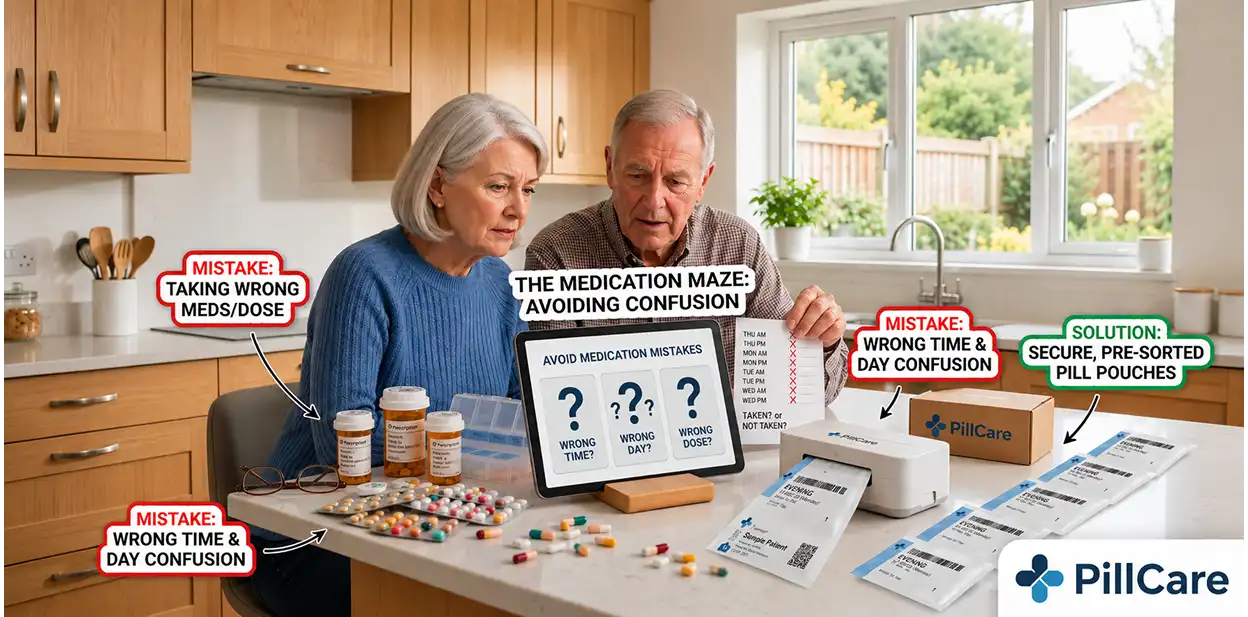
For an older adult managing five or more daily prescriptions, relying on memory and juggling a dozen loose, look-alike cardboard boxes is an uphill battle. When pills look physically similar but must be taken at completely different intervals, the logistical risk increases dramatically.
This is where introducing a structured, physical organisation system makes a profound difference. Transitioning away from loose boxes and into a clear, visual arrangement removes the daily guesswork for both the individual and their carer.
| Traditional Medication Management | PillCare Medication Pouches |
| Multiple medication boxes | A single sequential roll |
| Manual dose tracking | Pre-sorted, easy-tear pouches |
| Higher risk of missed doses | Clearly labelled with date and time |
| Multiple pharmacy trips | Synchronised monthly delivery |
By organizing medications into clear, time-specific doses, patients and carers can tell at an absolute glance whether a specific dose has already been taken or if one has been missed. Simplifying the daily process reduces the medication burden, giving families complete peace of mind that a routine is being followed safely and correctly every single day.
Frequently Asked Questions
What is the most common medication problem in older adults?
Managing several different prescriptions at the same time known as polypharmacy is one of the most common challenges. Juggling multiple daily doses increases the operational risk of missed doses, accidental duplications, and complex drug interactions.
Why do older adults make medication mistakes?
Mistakes typically happen due to a high daily medication burden, highly complex dosing schedules, physical limitations like reduced eyesight or arthritis, or subtle changes in memory and concentration.
What should I do if I accidentally miss a dose?
Always read the Patient Information Leaflet inside that specific medication box, as instructions vary significantly. As a general rule, if it is almost time for your next scheduled dose, skip the missed one entirely never take a double dose to “catch up.” If you are at all uncertain, contact your local pharmacist or call NHS 111 for immediate advice.
What is the easiest way to manage multiple repeat prescriptions?
The most efficient method is to nominate a single pharmacy provider to completely synchronise your prescription cycle, allowing all your regular monthly items to be processed, prepared, and handled together in one go.
Can medication pouches help reduce medication mistakes?
Medication pouches organise medicines into clearly labelled doses according to the day and time they should be taken. For some older adults and carers, this can make medication routines easier to follow and may help reduce the risk of missed or duplicated doses.
Can taking multiple medications increase the risk of side effects?
Yes. Taking several medications at the same time, sometimes called polypharmacy, can increase the likelihood of side effects, drug interactions and medication management challenges. Regular medication reviews can help ensure medicines remain appropriate and safe.
Sources & Clinical Guidance
The information in this article has been reviewed against current guidance from the NHS, National Institute for Health and Care Excellence (NICE), Royal Pharmaceutical Society (RPS), and Medicines and Healthcare products Regulatory Agency (MHRA).
Looking For Additional Medication Support?
PillCare is a UK medication management service that organises prescription medicines into clearly labelled medication pouches and supports prescription coordination through ProCare Pharmacy.
Medicines are sorted into easy-to-open pouches labelled by date and time, helping patients and carers manage complex medication routines more easily.
Let us handle the logistics so you can focus on enjoying daily life with greater peace of mind.
Disclaimer
This article is intended for general educational and informational purposes only and must not be interpreted as professional medical advice. Individual health circumstances vary substantially. Always seek direct, qualified guidance from your NHS GP, consultant, or community pharmacist regarding your specific prescription profile.
